Which Ceiling Material Stands Up to Hospital Cleaning Chemicals and Humidity
Which Ceiling Material Stands Up to Hospital Cleaning Chemicals and Humidity
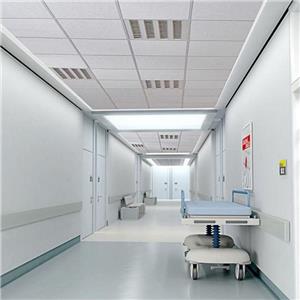
A hospital ceiling is much more than an ordinary commercial ceiling.
It will face conditions of a great deal of moisture because of regular cleaning, use of chemicals, and potential condensation from the HVAC (heating, ventilation, and air conditioning) system.
Such a ceiling must be hygienic too, so it has to resist the growth of bacteria and must be easily maintained.
Moreover, noise and fire are major issues in the hospital. Hence, the ceiling must have good noise absorption and fire resistance capabilities.
When considering Mineral Fiber Ceiling Tile vs PVC, you must decide based on the combined features of the respective products instead of just comparing the price only.
What Should a Hospital Ceiling Be Capable Of?
A Mineral Fiber Ceiling Tile combines noise reduction, fire resistance, insulation performance, and an ability to hide services.
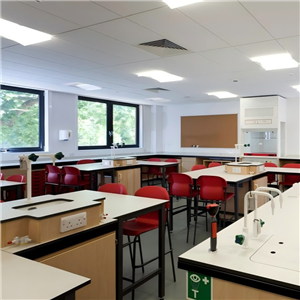
These qualities can lead to it being used in a variety of healthcare settings like patient rooms, corridors, laboratories, and waiting areas.
PVC ceiling tiles provide good moisture resistance and can be readily cleaned by just wiping, they are not usually chosen by healthcare construction projects.
Making an informed decision in a mineral fiber ceiling tile for hospital ceilings purchase requires looking at all the characteristics from noise absorption, fire rating, durability, level of cleanliness, as well as the availability of maintenance through a ceiling.
Mineral fiber ceiling tile vs pvc ceiling tile is more than just the price factor.
Moisture Resistance: Which Product Is The Best For Hospitals?
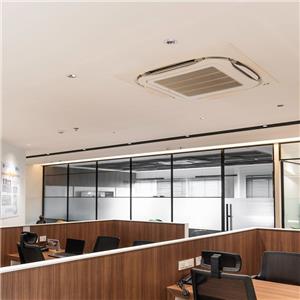
The use of disinfectants and other chemicals by hospitals together with the potential for condensation from HVAC systems in hospital can create a humid environment.
Humidity is a major concern that plays a big role in mineral fiber ceiling tile vs pvc ceiling tile selection.
Maintaining a hygienically clean environment by using White Moisture-Resistant Hospital Minimalist Mineral Fiber Ceiling Tile Solution through hydrophobic treatment allows it to resist moisture up to 99% RH, so the tile is less likely to sag, twist or degrade with humidity in hospitals.
This allows mineral fiber ceiling tiles to be used for hospital purposes as documented RH performance gives procurement teams a clearer base upon which to make their decision and select the right kind of ceiling tile for various rooms in which the products will be utilized.
PVC can be quite moisture-resistant as well and hence mineral fiber ceiling tile vs pvc ceiling tile decision-making should also consider actual room conditions like levels of moisture, frequency of cleaning, and other performance requirements.
Acoustic Performance and Patient Comfort
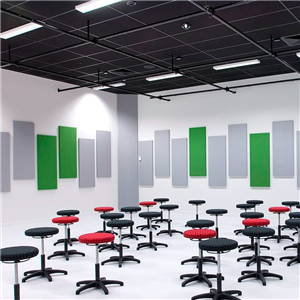
Hospitals have numerous unavoidable sources of noise such as conversations, medical devices, alarms, footsteps, and corridor traffic. Excess bouncing and spreading of sound, reverberation, could make patient wards a bit uncomfortable while at the same time causing the staff working in the hospital environment, the healthcare workers, some difficulties in communication and work.
Through the fibrous structure the mineral fiber is able to absorb sound as the material has a porous structure, and that is what makes the mineral fiber ceiling a good choice. One good example is the White Moisture-Resistant Hospital Minimalist Mineral Fiber Ceiling Tile Solution, which provides an NRC (the Noise Reduction Coefficient) range of 0.55–0.70. This means that the ceiling would help reduce the noise level and thus it can be used as a solution for acoustic control in patient rooms, laboratories, and so forth.
That makes mineral fiber a big differentiator when it comes to acoustic performance, a primary requirement for a project, as mineral fiber is more suitable and effective for sound absorption, which means fewer sound waves, a quieter environment, and ultimately, a more comfortable setting for patients.
Mineral fiber ceiling tiles for hospital are capable of providing sufficient sound isolation without the need for additional separate acoustic ceiling installation just by the virtue of their material.
To make an informed evaluation of mineral fiber ceiling tile vs pvc ceiling tile, buyers should also check whether the product has NRC data or, if no NRC data is available, should look whether the ceiling was tested and, if tested, the details of the results.
Firing Resistant and Healthcare Safety
Turning down fire is still one of the main things in every hospital building. When choosing a material buyers should look up the fire class of the particular product they want and not just be satisfied with a generic statement about fire resistance.
To meet this requirement the White Moisture-Resistant Hospital Minimalist Mineral Fiber Ceiling Tile Solution is a non-combustible material and therefore, has obtained a Class A1 fire rating for a non-combustible class, also references ASTM E84, EN 13501-1 and ISO 354 in providing the fire testing results to buyers.
This gives another point in the argument for the superiority of mineral fiber products as the products do not have a need to be fire tested if their materials have certain characteristics such as the fire resistance ones like in mineral fiber, while PVC materials need to get their fire-performance verified separately.
In mineral fiber ceiling tile for hospital ceilings fire performance is another technical parameter alongside with others such as humidity and acoustic that should always be included in the material specification.
Hygiene, Cleaning and Maintenance
A hospital ceiling is cleaned and inspected regularly, hence it should be an ideal surface to maintain appearance and support the regular cleaning regime.
The smooth white matte surface of the White Moisture-Resistant Hospital Minimalist Mineral Fiber Ceiling Tile Solution, which is suitable for use with standard hospital disinfectants, makes it easy to clean. The surface also features a layer of antimicrobial that prevents the formation and growth of the bacterial, fungal and mold organisms.
Given this advantage, hygiene is yet another factor that supports the superiority of mineral fiber ceiling tile vs pvc ceiling tile.
When buyers are looking into choosing mineral fiber ceiling tile for hospital ceilings, they should find out whether the surface of a product to be purchased is compatible with the cleaning products of the facility and whether a defective panel will not require the removal and discarding of the whole ceiling for maintenance.
It is a suspended ceiling system which provides the maintenance crews with a convenient way to reach services that are hidden behind the ceiling like HVAC systems and lighting fixtures to a name two, but there is the issue for the whole hospital to maintain during that time that a room will be occupied by the maintenance workers and they will need to take out the panel(s), which will be a disruption.
Appearance and Installations
A typical hospital environment favors an atmosphere that is clean, bright, and free of visual noise. As per the solution by SHENGTIAN, the white matte finish along with minimum 85% light reflectance ensures an even lighting throughout the space that is created by natural and artificial.
The solution includes a number of square, Tegular and recessed edge profiles together with standard 600 × 600 mm and 600 × 1200 mm sizes. They are different to a variety of architectural designs while keeping in compatibility with the T-grid hung ceiling system.
Modular installation is what makes mineral fiber ceiling tile for hospital ceilings quite easy so when a panel is to be taken out and a new one put in or some service is to be carried out, maintenance work is quick and less disruptive.
It is the modular nature of mineral fiber ceiling tile for hospital ceilings that makes renovation work and maintenance easier.
So Which Should Hospitals Choose?
There is no silver bullet for the mineral fiber ceiling tile vs PVC ceiling tile.
In case the main requirements are moisture and easy cleanliness, PVC ceiling is very suitable for that requirement, but, mineral fibers are more suitable when there is a need for not only a product or material to provide moisture and dryness protection but also the other benefits like the ability of a tile to absorb and block sound, performance in relation to fire, treatment to enhance hygiene, reflectance of light, ease of maintenance and access to the building services, and so on, which are a few but not all of the factors to consider a good building material for hospital ceiling.
When you choose mineral fiber ceiling tile for hospital ceilings, you have to consider the room’s function. A room used as a patient room can put emphasis mostly on good acoustics while a lab will require more attention to hygiene and stability.
The White Moisture-Resistant Hospital Minimalist Mineral Fiber Ceiling Tile Solution is a product that has all these requirements - it is moisture-resistant (99% RH), acoustically performing, has antibacterial treatment, and is fire resistant with a class A1 rating.
With years of practical product development combined with manufacturing know-how, and application, SHENGTIAN is capable of delivering a quality Mineral Fiber Ceiling Tile to meet the demand of healthcare settings.
Summary
To decide mineral fiber ceiling tile vs pvc ceiling tile based on just a single specification is misleading because the overall environment and the use of the room need to be taken into the decision-making.
Both are good at certain things: PVC is excellent for its physical performance and moisture resistance; while mineral fiber ceiling tile for hospital ceilings can deliver a wider range of benefits such as acoustic, fire protection, hygiene treatment, light reflectance and also ease of maintenance and access to services.
The product White Moisture-Resistant Hospital Minimalist Mineral Fiber Ceiling Tile Solution from SHENGTIAN is an ideal solution for the most advanced healthcare facilities of today as it integrates all these requirements within the one product.