Mineral Fiber Ceiling Tile vs Gypsum Board: What Contractors Really Choose on Site
Mineral Fiber Ceiling Tile vs Gypsum Board: What Contractors Really Choose on Site
Introduction
When you talk to contractors on real job sites, the selection of ceiling usually boils down to just two options: Mineral Fiber Ceiling Tile or gypsum board.
Both seem fine on drawings. But differences emerge quite quickly when it comes to installation — especially when it is related to maintenance, noise control, and installation speed. As a result, buyers often look up mineral fiber vs gypsum ceiling tiles, ceiling tiles for commercial buildings, and acoustic ceiling tiles for office spaces before finalizing their choices of materials.
This article presents hands-on knowledge of the industry, not theoretical issues.
Where Each System Actually Fits
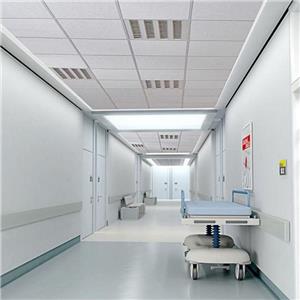
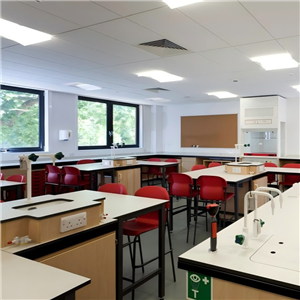
Quite often, a Mineral Fiber Ceiling Tile setup in commercial premises is the go-to solution for offices, schools, hospitals, and retail areas. Essentially, these are places where the ceiling must be accessible from the above side.
Gypsum board is still being installed but is largely reserved for scenarios where the ceiling is viewed as a fixed decorative surface.
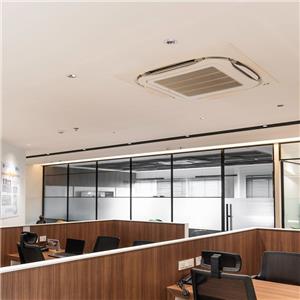
Actually, on real sites, if maintenance teams need access to wiring or HVAC systems quite often, the workers will almost without fail choose ceiling tiles for commercial buildings over a sealed gypsum ceiling.
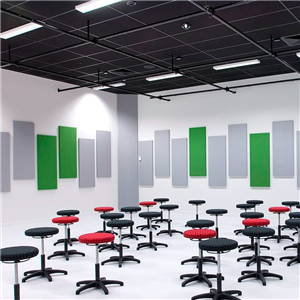
Since open work areas turn out to be rather noisy, it is no wonder that office floor designers mostly opt for acoustic ceiling tiles for office spaces.
What You Notice During Installation
Speed and Flexibility
At the very site of the work, the speed of installation has a bigger say than plans usually show.
A Mineral Fiber Ceiling Tile system works in a grid structure. If something is not right, the decision could be made to change or fix only a panel. Very frequently, it is the choice of installers if the deadline is very short.
Gypsum board is, on the other hand, a fixed and finished product; any modification again means cutting, repairing, and repainting.
Handling Mistakes
Another real difference will be noticed and appreciated by those who get the bonus of making a mistake.
The scenario of a leaking pipe above a gypsum ceiling makes repair work so unpleasant that it becomes a major downside. On the contrary, with Mineral Fiber Ceiling Tile, it is possible to take out only the impacted panel.
This just minor difference will probably explain why contractors still opt for ceiling tiles for commercial buildings in the majority of public projects.
Noise Control Is Where the Gap Becomes Clear
In fact, it is the sound that you will hear in real buildings that will reveal one of the main things.
A Mineral Fiber Ceiling Tile by nature is a sound absorber and minimizer of echo. You will be able to hear the difference right after installation in open offices.
Gypsum board sound reflection is not as low as that of mineral tiles. Sometimes, additional ecoustic layers are needed, making the project more expensive and long.
That is exactly why a lot of designers decide on acoustic ceiling tiles for office spaces if they want to have as little noise complaints as possible.
Maintenance Over Time
Sometimes, price is the only factor that decides a purchase. But it is the running costs that are critically important.
Thanks to Mineral Fiber Ceiling Tile, the maintenance teams can literally get to the systems above the ceiling without even spending a few minutes. No cutting or repainting is required.
Maintenance action with a gypsum ceiling means that it has to be repaired every single time an opening (access) in the ceiling structure is being made.
In busy settings such as malls, hospitals, or office towers, this will turn out to be a significant operating cost. That explains why facility managers still choose ceiling tiles for commercial buildings even if gypsum seems to them more “premium” at first.
Common Real-World Mistakes
Just one of the mistakes that we often run into is the use of gypsum board simply because the design renderings show it to be “smoother”.
In fact, after lighting, sprinklers, and vents are installed, that “nice smooth surface” will not have so much of an impact as “maintenance access”.
Another error is to buy low-grade Mineral Fiber Ceiling Tile without acoustic testing, as not all tiles perform identically even if they look the same.
The frequency of access to the ceiling is also overlooked by some buyers, with the real situation nearly always being more than expected.
What Contractors Actually Prefer
According to SHENGTIAN project feedback, most of the time, contractors do not even see this as a design discussion anymore—it’ a function decision.
They invariably opt for Mineral Fiber Ceiling Tile in offices and schools as it not only handles noise well but also saves time during maintenance.
For commercial projects, they go for ceiling tiles for commercial buildings because systems over the ceiling are changed very often.
And the usage of acoustic ceiling tiles for office spaces is practically a rule for open office layouts.
SHENGTIAN is committed to offering well-performing ceiling systems that are also quite stable and simple to install, which are exactly what on sites, not in product catalogs, generally perform well.
Conclusion
Gypsum board is certainly a good choice for decorative interiors, but in real commercial construction, Mineral Fiber Ceiling Tile is normally the more reasonable alternative.
After all, you focus on noise control, maintenance access, and installation speed, most contractors would be compelled to choose ceiling tiles for commercial buildings or acoustic ceiling tiles for office spaces for their long-term needs.