Mineral Fiber Ceiling Tile vs. Acoustic Panels for Conference Rooms: Which Is More Effective?
Mineral Fiber Ceiling Tile vs. Acoustic Panels for Conference Rooms: Which Is More Effective?
A conference room can look polished and still be difficult to use if participants struggle to hear each other. Voices reflect off glass, drywall, tables and other hard surfaces, creating reverberation that can make meetings and video calls tiring. Choosing the right acoustic treatment means deciding where sound needs to be absorbed, how much ceiling area can be treated, and whether the room also needs wall treatment.
A Mineral Fiber Ceiling Tile and a purpose-made acoustic panel can both help control reflected sound, but they are not identical solutions. The more effective choice depends on room layout, meeting format, finish requirements and the acoustic performance documented for each product.
How Do Ceiling Tiles and Acoustic Panels Work?
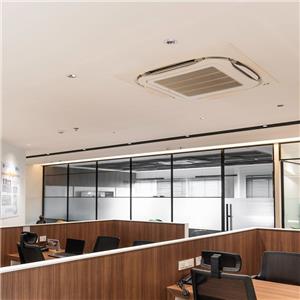
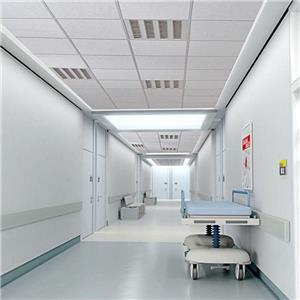
Mineral fiber ceiling products are installed across a suspended ceiling grid. Because the ceiling often covers a large, continuous surface, it can provide broad sound absorption while accommodating lighting, diffusers and access to building services. Mineral fiber acoustic ceiling tiles are especially useful when a project already specifies a modular ceiling system.
Acoustic panels are a broader category. They may be mounted on walls, suspended as clouds or baffles, or installed as decorative elements. Their performance varies with core material, thickness, air gap, facing and mounting method. Conference room acoustic panels can target areas where reflections are especially disruptive, but a few panels do not necessarily provide enough total absorption for a highly reverberant room.
The key question is not simply which product absorbs more sound. It is how much effective absorption the room needs and where it should be placed.
Which Option Improves Speech Clarity More?
For typical meetings, the goal is to reduce excessive reverberation so words remain distinct without making the room sound unnaturally dead. Speech intelligibility in conference rooms depends on the balance between direct sound from the speaker and reflected sound arriving later. Room size, microphone and loudspeaker placement, background noise, and surface finishes all influence the result.
A ceiling treatment can be effective because it treats a broad overhead area where sound reflects between participants. The selected Mineral Fiber Ceiling Tile should be evaluated by its tested Noise Reduction Coefficient (NRC), thickness and installation conditions—not by product name alone.
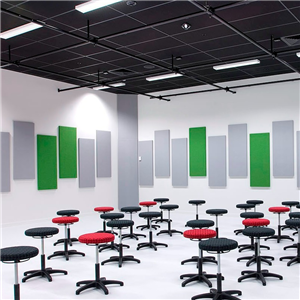
Wall-mounted acoustic panels can be useful when the side or rear walls create strong reflections, or when a ceiling cannot be changed. They can also supplement a ceiling treatment in glass-heavy boardrooms. For larger rooms, a combination of ceiling absorption and strategically placed wall treatment may be more effective than relying on either surface alone.
What Do NRC and Other Acoustic Ratings Tell You?
NRC is a single-number rating used to describe sound absorption under standardized test conditions. In general, a higher NRC indicates greater absorption across the frequencies represented by the rating. It does not tell you how much sound will pass through a wall or ceiling into another room, and it does not guarantee a specific reverberation time in every room.
The WELL Building Standard includes a provision for conference and teleconference rooms calling for NRC 0.8 or higher on at least 50% of the ceiling area in applicable project types. This is a design reference, not a universal code requirement. The appropriate target depends on the project brief and applicable standards.
When comparing mineral fiber acoustic ceiling tiles with fabric-wrapped or other acoustic panels, check the test method, mounting configuration and frequency data where available. A rating measured with an air cavity or a particular mounting arrangement may not represent a different installation. If the brief includes room-to-room privacy, request data for sound transmission control separately; NRC alone cannot demonstrate that performance.
When Is a Mineral Fiber Ceiling Tile the Better Fit?
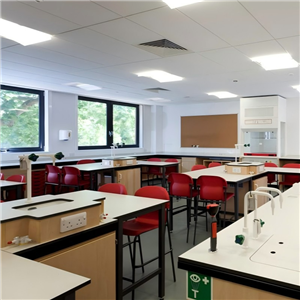
A Mineral Fiber Ceiling Tile is often practical when the conference room uses a suspended grid, the project needs broad ceiling coverage, and the design requires access to lights, ventilation and other services. Modular panels can also simplify maintenance: individual tiles can usually be lifted or replaced without removing a full ceiling finish.
SHENGTIAN's Conference Room High-Density High NRC Decorative Mineral Fiber Ceiling Tile is listed in 600 × 600 mm and 600 × 1200 mm sizes, with thickness options of 14, 15, 16 and 18 mm. The product page lists square, Tegular and recessed edge profiles, along with a white matte finish. These options can help contractors coordinate the ceiling with a standard grid and the room's interior design.
The same page lists NRC 0.55–0.70 in its specification table, while other product copy refers to higher NRC values. Buyers should confirm the applicable rating for the exact thickness and product version and obtain the current test report before specifying performance. A Mineral Fiber Ceiling Tile should be selected on verified documentation, not on the highest figure shown in promotional copy.
When Are Acoustic Panels More Effective?
Separate acoustic panels may be preferable when the ceiling is exposed, decorative, difficult to modify or already occupied by services. Panels can be added to walls or suspended above a meeting table, helping designers treat selected reflection paths without replacing the existing ceiling.
Conference room acoustic panels also offer a wide range of finishes, colors, shapes and branding options. This can be valuable in executive boardrooms or client-facing spaces where the acoustic treatment is intended to contribute to the interior concept. However, fabric finishes, panel edges and mounting hardware need to suit cleaning, durability and fire-safety requirements.
Wall-mounted acoustic panels are not automatically superior to ceiling tiles. Their effectiveness depends on their absorptive properties, coverage and location. If the main issue is reverberation throughout the room, treating only one small wall section may have limited impact. A qualified acoustics consultant can estimate the required absorption and identify the best distribution.
How Should Buyers Compare Cost, Installation and Maintenance?
Compare complete installed systems rather than unit prices alone. A ceiling tile quote may include a modular grid or may assume that the grid is supplied separately. Panel projects may require brackets, suspension wires, backing, specialist labor or careful coordination with wall finishes. These items can change the final budget.
For contractors and procurement teams, compare these factors:
Coverage: Calculate how much ceiling and wall area will receive absorption.
Verified performance: Match NRC reports to the exact product and mounting conditions.
Coordination: Check lighting, HVAC diffusers, sprinklers, microphones and video equipment.
Maintenance: Consider access to the ceiling void, cleaning requirements and replacement availability.
Appearance: Review samples for texture, color, edge detail and alignment with the room design.
Fire and building requirements: Request current documentation that applies to the selected product and local regulations.
Speech intelligibility in conference rooms can also be affected by HVAC noise and audio equipment. Acoustic finishes should be coordinated with background-noise control, microphone placement and video-conferencing system setup rather than treated as a standalone fix. For procurement comparisons, include the cost of mineral fiber acoustic ceiling tiles and any supplementary panels needed to meet the room's target performance.
How Can SHENGTIAN Support Conference Room Projects?
SHENGTIAN's conference room ceiling tile is designed for commercial meeting spaces where sound absorption and a neat, modular finish are both important. Its listed sizes, thicknesses and edge options give project teams several parameters to coordinate with the reflected ceiling plan.
When assessing a Mineral Fiber Ceiling Tile for a new fit-out or refurbishment, share the room dimensions, ceiling height, intended use, grid type and required acoustic target. SHENGTIAN's product details can then be checked against the project specification, with the relevant test reports, finish and supply details confirmed before ordering.
Frequently Asked Questions
Are ceiling tiles better than wall panels for conference rooms?
Neither is always better. Ceiling tiles provide broad overhead coverage in suspended ceiling systems, while wall panels can treat specific reflection areas or work where the ceiling cannot be modified. The room's acoustic target and available surfaces determine the best combination.
Does a higher NRC guarantee clear speech?
No. NRC indicates sound absorption under standardized conditions, but speech clarity also depends on room geometry, background noise, microphone placement and the amount and distribution of absorptive material.
Can ceiling tiles and acoustic panels be used together?
Yes. A ceiling treatment can reduce overall reverberation, while additional panels can address reflections from glass or other hard walls. The combined design should be based on the room's needs rather than a fixed rule about product quantities.
What should be confirmed before ordering?
Confirm the exact model, dimensions, thickness, edge profile, acoustic reports, fire documentation, installation system, finish, quantity and lead time. For SHENGTIAN's product, verify which published NRC figure applies to the specified configuration.
Conclusion
For many conference rooms, a suspended mineral fiber ceiling is an efficient way to treat a large reflective surface and retain access to building services. Separate acoustic panels provide more placement and finish flexibility, particularly where wall reflections are a concern or the ceiling cannot be changed. In demanding rooms, a coordinated combination may be the most effective approach.
The best specification is the one that meets the room's acoustic target with verified test data and a practical installation plan. SHENGTIAN's Conference Room High-Density High NRC Decorative Mineral Fiber Ceiling Tile can be considered where a modular ceiling is appropriate, provided buyers confirm the precise performance data and project requirements before approval.